Islamabad, June 26 (IANS) Members of a growing organised blasphemy business network in Pakistan are actively attempting to trap people into committing blasphemy on social media. Some Pakistani officials, including members of Pakistan's Federal Investigation Agency (FIA), conduct work on behalf of the blasphemy network, a report said.
"The main purpose here is to extort bribes from the target in exchange for dropping criminal charges. In the custody of such people, the treatment is appalling. At least several cases have seen the abuse turn fatal. No demographic in Pakistan is safe from for-profit blasphemy accusations. But religious minorities -- Christians, Hindus, and certain sects within Islam deemed heretical -- are at increased risk," a report in Zenit mentioned.
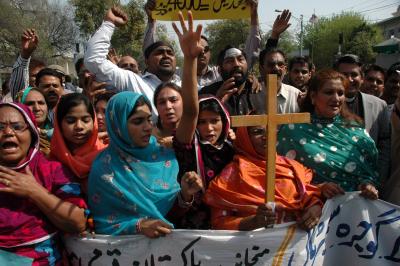
Blasphemy accusations against a religious minority can become so volatile that everyone from the accused person's community have to leave their houses and move to different places. Dozens of houses have been destroyed in mob attacks.
"Simon, a Pakistani Christian, said that majority of blasphemy accusations these days are related to alleged behaviour on social media platforms. He said some people stalk religious minorities online and trap them into saying something that could be considered as blasphemous. He stated that if they target someone, they try to find loophole in their posts on social media that can be exploited," according to a report in Zenit.
Someone with bad intentions may start conversation with a person online in Pakistan and reveal a personal detail to build trust before taking the conversation towards faith. At this point, if the target said even one thing that might be considered critical, mocking or critical, the target is in big trouble as the screenshot of that message will be taken as an indestructible evidence.
"Now you can start extorting him. Or have a few select officials visit him. If the target stays defiant in the face of such pressure, then leak the screenshot to his employer, his family, and, of course, the local imams and activists -- they'll gladly handle it from there, with layers of institutional support behind them," a report in Zenit mentioned.
"Pakistan's blasphemy business network started in the city of Rawalpindi and the capital of Islamabad, but has since expanded across much of the country. Aside from connections to Pakistani officials, the network also has connections to prominent Islamic religious scholars. At blasphemy trials in Pakistan, mobs often surround courthouses to make sure that judges issue the 'correct' ruling. It seems many of these mob participants are motivated more by profit than spiritual indignation. This motivation became clear during disputes between mob organisers and participants who were not paid for their services," it added.
Earlier in March, a leading minority rights group alleged that Pakistan's blasphemy laws are being exploited as a tool of systematic coercion, enabling organised religious groups and their allies to intimidate judges, prosecutors, police, and politicians, effectively holding the country's justice system and broader state machinery hostage.
According to the Voice of Pakistan Minority (VOPM), this "blasphemy complex" relies on fear of mob violence, targeted killings, and economic blackmail to "paralyse" institutions tasked with protecting rights and upholding the rule of law.
"Pakistan's blasphemy provisions carry a mandatory death penalty or life imprisonment, but their wording is vague and broad, making mere accusations enough to trigger arrest and detention. Human rights organisations have documented that these laws are routinely used to settle personal scores, grab land, and persecute religious minorities, rather than to address genuine incitement or hate speech," the rights body said.
Citing recent investigations, the VOPM added that blasphemy accusations are not only spontaneous expressions of outrage but, in many cases, orchestrated by organised networks.
The rights body noted that human rights lawyers in Pakistan have described a coordinated "blasphemy business group" or "Islamist gang" that manufactures cases, often by circulating allegedly blasphemous content online, filing complaints and then extorting the accused or their families.
It added that judges in Pakistan hearing such blasphemy cases operate under an atmosphere of direct and at times lethal intimidation.
According to HRCP, human rights groups document instances where judges "have been openly threatened in courtrooms, pressured by crowds outside court premises, and denounced in sermons or social media campaigns when they show leniency or demand solid evidence".
"Lawyers defending those accused of blasphemy face similar or greater danger: several have been assassinated, including prominent rights lawyer Rashid Rehman, who was shot dead in his office after defending an academic accused of blasphemy, following explicit threats over his role in the case. Because of these patterns of violence, many lawyers refuse to take such cases, leaving the accused without meaningful legal representation and further skewing proceedings toward conviction or endless detention," the rights body mentioned.
"The climate of fear means that judges often deny bail, avoid deciding cases promptly, or pass responsibility upward in the judicial hierarchy to avoid individual blame," it added.
--IANS
akl/khz