
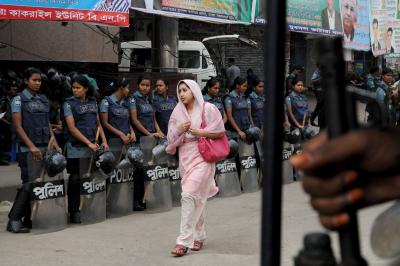
Dhaka, Sep 5 (IANS) Bangladesh is facing a terror threat that extends far beyond the five-member cell allegedly led by Neo-Jamaat-ul Mujahideen Bangladesh member Bomaru Mamun, with at least 311 members of banned terrorist organisations still at large as of April 2026.
The figure includes 16 Neo-JMB operatives, 185 members of the original JMB, 83 from Ansar Al Islam and sixteen from Harkat-ul-Jihad-al Islami Bangladesh, highlighting the scale of the threat confronting the authorities, a report has stated.
These are not merely isolated names on a police watchlist but reflect successive generations of jihadist militancy, ranging from Afghanistan-linked veterans of HuJI-B to Islamic State-inspired Neo-JMB cadres and the digitally focused operatives of Ansar Al Islam, according to a 'Stringer Asia' report.
“For several years, Bangladesh appeared to have solved its jihadist problem. The security forces had dismantled networks, killed or arrested senior commanders and disrupted the organisational structure responsible for the 2016 Holey Artisan Bakery massacre. Neo-Jamaat-ul Mujahideen Bangladesh, the Islamic State-inspired faction that had briefly turned Dhaka into one of the most visible fronts of international jihadism, seemed to have been reduced to scattered fugitives and online sympathisers. The bombs now reappearing around Dhaka suggest that the victory may have been less definitive than advertised,” the report detailed.
“On August 16, police arrested 26-year-old Juel Bhuiyan in Demra with two handmade explosive devices. He was allegedly associated with Nazmul Hasan Mamun, better known as Bomaru Mamun, a fugitive suspected of leading a small Neo-JMB cell. Four days earlier, a powerful pressure-cooker bomb had been found beside a mosque in Savar. Another had been recovered outside a grocery shop in Ashulia at the end of July. On August 11, Mohammad Arif, another suspected Neo-JMB operative, was arrested in Hemayetpur with pipe bombs, weapons and bomb-making materials,” it added.
According to the report, considered separately, the incidents might appear to be nothing more than the work of a few remaining militants who possess chemical resources but lack the organisational capacity.
It noted that taken together, however, and viewed alongside attacks on police posts, intelligence personnel, a temple and members of minority communities, these incidents point to something far more serious: Neo-JMB appears to be rebuilding through small, decentralised cells that can operate without a territorial stronghold or an extensive organisational hierarchy.
In both 2024 and 2025, Bangladeshi authorities recorded no arrests linked to Neo-JMB. That changed in 2026, with at least five suspected operatives detained by August 23, Stringer Asia reported.
Terrorist organisations seldom signal their resurgence through spectacular attacks at the outset; instead, they typically begin by reconnecting fugitives, bringing in inexperienced recruits, experimenting with explosives and testing the response of security forces, it noted.
“The devices recovered in recent months point precisely in that direction. Investigators searching Arif’s rented house in South Shyampur found liquid chemicals, potassium nitrate, detonators, electrical wires, remote controllers and the remains of pipe bombs. More worrying was the reported use of tri-acetone triperoxide, or TATP, an extremely unstable explosive frequently employed by jihadist networks because its ingredients are relatively easy to acquire,” the report highlighted.
--IANS
scor/as