
Washington, April 20 (IANS) Asia’s growth remains resilient, but a surge in oil and gas prices driven by the Middle East conflict is raising risks for inflation and external balances, the International Monetary Fund (IMF) said.
“Asia entered 2026 on a solid footing with growth remaining resilient despite the region bearing the brunt of US tariffs and heightened uncertainty,” Krishna Srinivasan, Director of the IMF’s Asia and Pacific Department, said at a press briefing during the Spring Meetings.
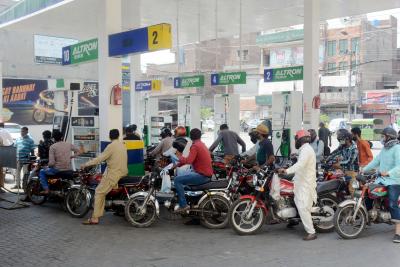
He warned that “the new energy shock will have a negative impact on the region,” adding it is “raising inflation, weakening external balances, tightening financial conditions, and narrowing policy space.”
The IMF said Asia’s exposure is high because of its energy-intensive economies and dependence on imports. Oil and gas use accounts for about 4 per cent of GDP across the region, nearly double Europe’s share.
“Limited domestic production means that this high energy intensity translates into import dependence,” Srinivasan said, noting net oil and gas imports amount to about 2.5 per cent of GDP and rise to as much as 8 per cent in some economies.
Despite the shock, the IMF kept its baseline growth outlook broadly unchanged, assuming the conflict remains limited. Regional growth is projected to ease from 5 per cent in 2025 to 4.4 per cent in 2026 and 4.2 per cent in 2027.
“Asia remains the main driver of global growth,” Srinivasan said, while warning that risks are “firmly to the downside.”
It also flagged structural issues, including high youth unemployment and skill mismatches. Rapid adoption of artificial intelligence could worsen labour market pressures if skills do not keep pace, the fund said.
The IMF called for reforms to strengthen social safety nets, boost domestic demand and deepen regional trade integration. It also urged investment in alternative energy and efficiency to reduce exposure to future shocks.
--IANS
lkj/as