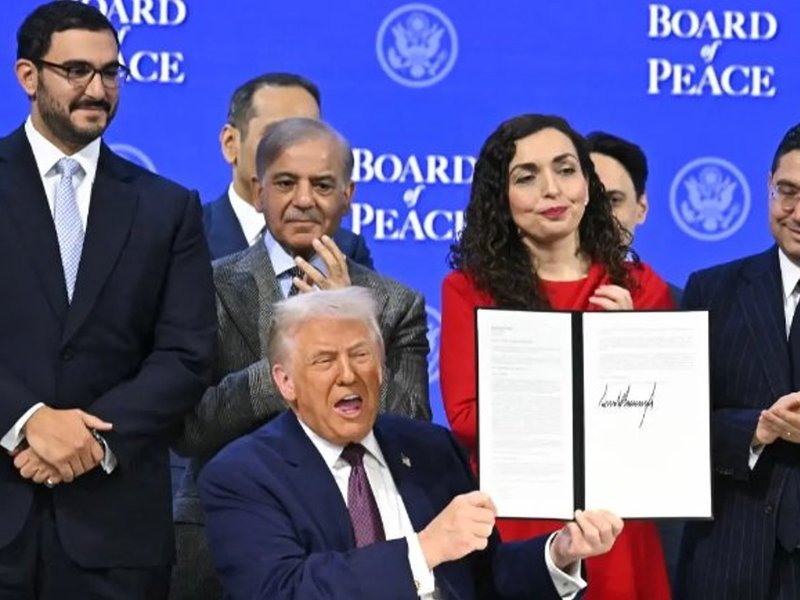
Washington, Jan 22 (IANS) President Donald J. Trump on Thursday launched the Board of Peace at Davos, outlining a US-backed effort to lock in peace, open crossings, demilitarise armed groups, and begin a long-term reconstruction and economic revival in Gaza.
“This is a very exciting day,” Trump said as he described the initiative as a shift from war to rebuilding.
Trump later framed Gaza’s future in economic terms, arguing that redevelopment and geography could reshape the territory's prospects.
“I’m a real estate person at heart, and it’s all about location,” Trump said. “Look at this location on the sea. Look at this beautiful piece of property, what it could be for so many people.”
The launch followed the signing of the Board of Peace charter. Secretary of State Marco Rubio said the Gaza effort reflected what he called a decisive shift in U.S. diplomacy under Trump.
Rubio said many believed the Gaza conflict could not be resolved.
“If we go back just a few months ago, people thought what was happening in Gaza was impossible to solve,” he said. “No one thought that that would ever come to a resolution without more fighting and more bloodshed along the way.”
He argued that longstanding international institutions had failed to deliver results.
“Sadly, many of the institutions that have served us well in many cases for the last 70 years were unable to do anything about it,” Rubio said.
Rubio credited Trump’s persistence for pushing negotiations forward and said the administration was focused on implementation, not declarations.
“This is not just a board of peace,” Rubio said. “This is a board of action.”
He said the goal was to ensure that the Gaza agreement becomes durable and could serve as an example elsewhere.
“This is the beginning of a new era and a new stage,” Rubio said. “A model to the rest of the world of what is possible.”
An announcement during the event said the Rafah crossing between Gaza and Egypt would open next week, a move seen as critical for humanitarian access and economic activity.
U.S. special envoy Steve Witkoff said the administration had pursued a deal many believed was unattainable.
“We have achieved a peace deal in Gaza,” he said. “We have brought the hostages home, all of the bodies except for one, and we will bring that body home too.”
Witkoff said the agreement created momentum for a broader shift.
“Maybe most importantly, we have created a sense of hope for what the future can bring in Gaza,” he said.
Senior presidential adviser Jared Kushner followed with an illustrated presentation outlining the rebuilding strategy and the challenges of moving from ceasefire to governance and growth.
“How do you implement peace?” Kushner said. “Peace is a different deal than a business deal because you’re changing a mindset.”
Kushner said Gaza’s crisis went beyond the recent war.
“There were two years of very intense war,” he said. “For the people in Gaza, there was more than just two years of war. They had 20 years of hopelessness.”
He said security and governance were prerequisites for economic recovery.
“Without security, nobody’s going to make investments,” Kushner said. “Nobody’s going to come build there.”
Kushner said Gaza could not rely on aid indefinitely.
“85 per cent of the GDP of Gaza has been aid for a long time,” he said. “That’s not sustainable. It doesn’t give these people dignity. It doesn’t give them hope.”
He said the plan aimed to replace dependence with jobs and private investment.
“We want to use free market economy principles,” Kushner said, adding that the goal was “to give these people the ability to thrive and have a good life.”
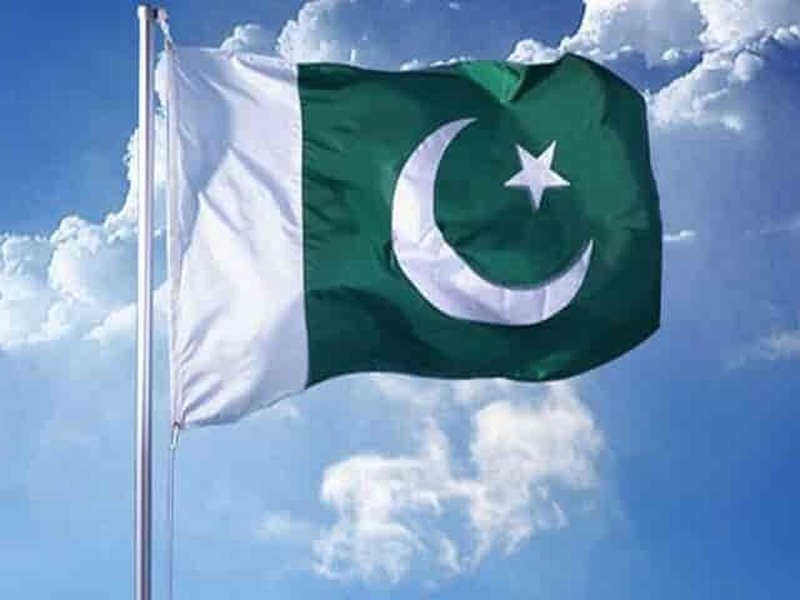
The Board of Peace includes leaders from Bahrain, Morocco, Argentina, Armenia, Azerbaijan, Bulgaria, Egypt, Hungary, Indonesia, Jordan, Kazakhstan, Kosovo, Mongolia, Pakistan, Paraguay, Qatar, Saudi Arabia, Turkey, the United Arab Emirates and Uzbekistan, according to a White House list.
The Davos launch brought together governments from the Middle East, Europe, Central Asia and South America as part of a broader effort to stabilise Gaza through demilitarisation, governance reform and reconstruction—an approach the Trump administration argues could reshape post-conflict recovery efforts beyond the region.
--IANS
lkj/dan