
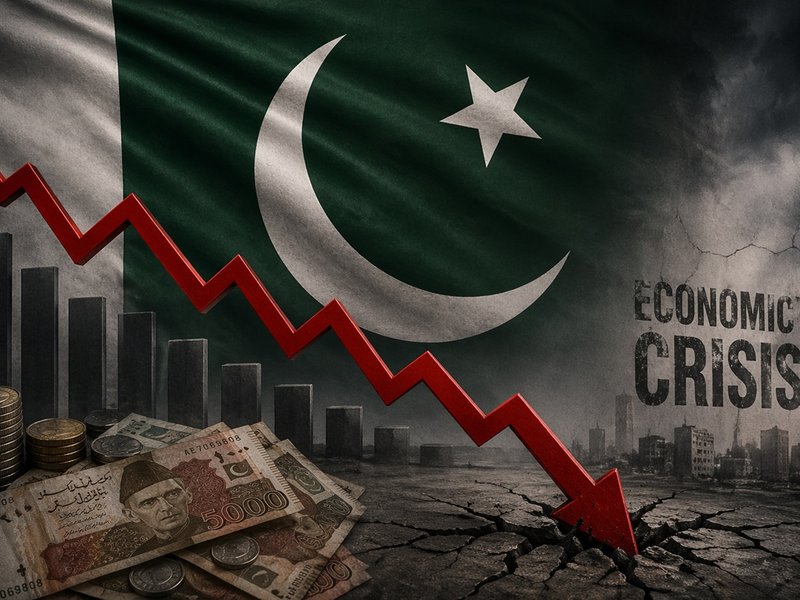
New Delhi, Nov 6 (IANS) Pakistan's external debt almost doubled over the past decade to reach $135.1 billion in 2025 with China remaining its largest bilateral creditor, a report has said.
According to an analysis by Dawn, the country's total external debt increased from $68.7 billion in 2015 to $135.1 billion in 2025, a rise of nearly 97 per cent over the period.
The debt stock comprised $107.1 billion in public and publicly guaranteed debt, $17.6 billion in private non-guaranteed debt and $10.5 billion in short-term obligations.
Among public sector liabilities, multilateral lenders accounted for $56.8 billion, while bilateral creditors were owed $42.4 billion.
The report also highlighted that China emerged as Pakistan's largest individual creditor with outstanding loans of $22.4 billion, followed by the World Bank at $19.2 billion and the Asian Development Bank at $16.8 billion.
It noted that Pakistan received support from key lenders during 2025, including a $2 billion loan maturity extension from China and $2.3 billion in IMF disbursements under ongoing support programmes.
The Middle East, North Africa, Afghanistan and Pakistan (MENAP) region recorded the sharpest increase in external debt relative to gross national income, highlighting continued debt accumulation despite some improvement in debt-servicing indicators.
Globally, external debt owed by low and middle income countries rose 5.5 per cent to a record $9.4 trillion in 2025.
Debt levels in the poorest countries increased even faster, while borrowing costs remained elevated.
Countries eligible for concessional financing faced average interest rates of 8.2 per cent on new commitments, the highest level in decades.
Dawn also showed debt-service payments across low and middle income economies rose for a fifth consecutive year to $1.4 trillion which underscores persistent repayment pressures despite stronger economic growth and improved capital inflows.
--IANS
ag/