
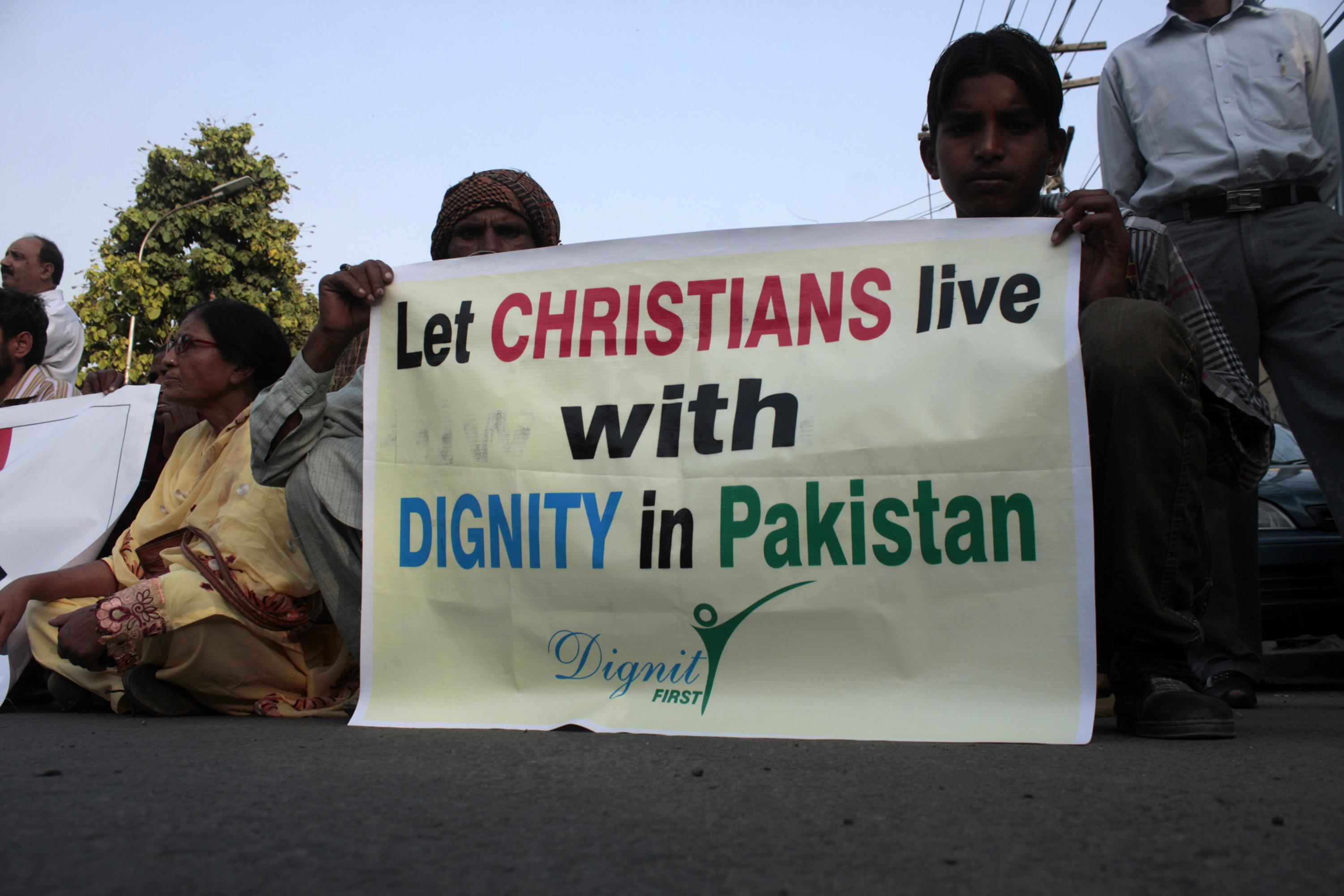
Islamabad, June 19 (IANS) Several human rights activists have expressed grave concern over the increasing threat to religious freedom in Pakistan, citing discriminatory policies, social attitudes and inadequate enforcement of constitutional protections, local media reported.
Addressing a symposium titled 'Advancing Religious Freedom Through Education: Emerging Challenges, Opportunities and Responses' held at the Human Rights Commission of Pakistan (HRCP) Secretariat in Lahore, Pakistani lawyer Hina Jilani said that religious freedom has long remained one of Pakistan’s most pressing human rights issues despite constitutional guarantees and sustained advocacy efforts.
“We are ashamed that the laws we have today show a stark difference between the Constitution and its implementation. Where we took one step forward, we moved two steps behind,” Pakistan's digital media platform Voicepk.net quoted Jilani as saying, adding that religious freedom has remained a central concern of HRCP since its establishment in 1986.
She argued that policies and laws introduced during the rule of former Pakistani President General Zia-ul-Haq reinforced perceptions of religious superiority among the majority population and deepened discrimination against minorities.
“In our country, it has been the policies, legislation and social attitudes which have unfortunately seeped into judicial understandings,” she said.
Drawing attention to safeguards in Pakistan's constitution, Jilani said that while Article 20 guarantees freedom of religion and protection of minority rights, its implementation remains inconsistent.
“My major concern today has been for the Ahmadis. We have not just violated their freedom, but if they are a minority, they have the right to profess their religion,” she said, noting that expressions of faith by Ahmadis on digital platforms have increasingly resulted in cybercrime proceedings against them.
According to Neelam Hussain, educational policies crafted during successive military governments fostered a singular religious-nationalist narrative undermining critical thinking and diversity.
She said that the resulting biases in textbooks and classrooms continue to shape societal attitudes within society and hinder opportunities for minority students, Voicepk.net reported.
Addressing curriculum-related challenges and constitutional protections for religious minorities, another speaker, Peter Jacob, referred to constitutional provisions stating that children should not be forced to receive religious instruction that does not correspond to their beliefs.
He also voiced concerns over the inclusion of compulsory religious content in curricula and the persistent challenges confronting educational institutions run by minority communities.
--IANS
scor/as