
Quetta, June 12 (IANS) Women’s rights activists and social media users have voiced concerns over the easy and unchecked availability of corrosive acid in local markets of Pakistan, following the attack on a female doctor in Balochistan province.
Women’s rights activist Riffat Ayesha was quoted as saying by The Media Line - an American news agency covering the Middle East - that Pakistan’s legislative framework has failed to deter gender-based chemical violence. She mentioned that corrosive acids are easily available in informal markets under the pretext of being used as domestic drain cleaner or industrial agents despite a decade of legal reforms.
She condemned the absence of a state-mandated tracking system to verify on who was purchasing these lethal substances and for what purpose. Ayesha emphasised that the unregulated sale of these chemicals will continue to cause physical harm and lifelong psychological terror on women in Pakistan until the authorities implement strict buyer verification.
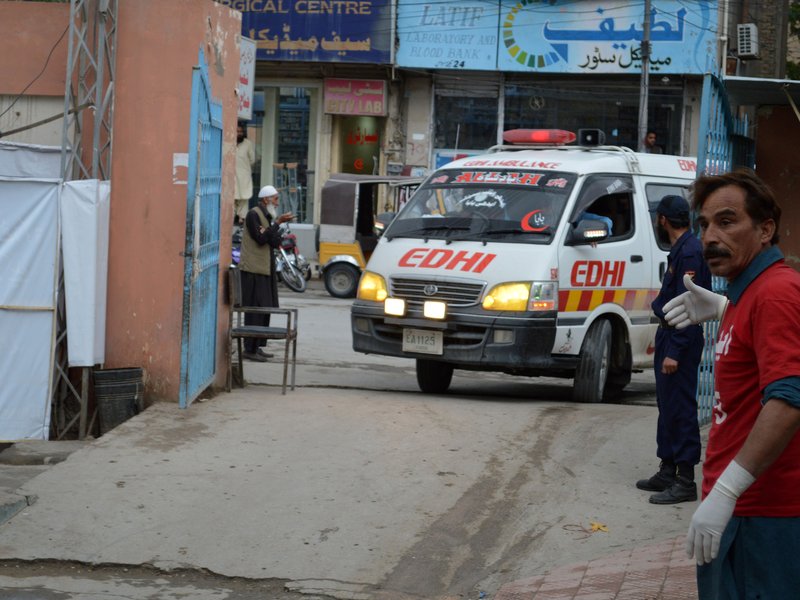
Her statement came after Mahnoor Nasir (29) was injured when a hospital employee allegedly threw acid on her in the ward at Civil Hospital in Balochistan's Quetta on June 5, police and hospital authorities said. Following her initial treatment in Quetta, she was airlifted to Karachi's hospital for specialised care, where hospital sources said she suffered burns to about 13 per cent of her body, including injuries to her face, abdomen, thighs, and both hands. The hospital stated that Mahnoor Nasir's eyesight remains intact, however, both her eyes were affected, The Media Line reported.
Earlier this week, Young Doctors Association (YDA) President Hai Baloch criticised the Pakistani government for its lack of seriousness towards the demands raised by the medical community.
While addressing a press conference at a protest camp outside Civil Sandeman Hospital in Quetta against the acid attack on Nasir, Hai Baloch stated that the government's inappropriate behaviour had left them with no option but to launch a protest, leading Pakistani daily, The Express Tribune, reported.
"The attack on Dr Mahnoor Nasir is an assault on the values of our tribal society," adding that the government has not addressed their concerns.
Hai Baloch called for establishing a judicial commission to carry out a probe into the incident at Civil Hospital Quetta and immediate measures to improve security for doctors and hospitals, The Express Tribune reported. The YDA announced that they have decided to boycott outpatient departments (OPDs) and other services in all government hospitals of Balochistan as part of their protest. However, they said that they will continue to work in gynaecology wards, trauma centres, and emergency units.
On June 6, the Human Rights Council (HRC) of Pakistan strongly condemned the "barbaric and regrettable” incident of an acid attack on a female doctor during her duty at Sandeman Civil Hospital in Balochistan's capital, Quetta.
Expressing grave concern over the “cowardly assault," the rights body said, “A woman associated with such a sacred profession, engaged in serving humanity and saving lives, to be targeted with such brutal violence right at her workplace is not only a slap in the face to the medical community but also to the entire society and humanity.”
Describing the incident as the gravest security failure, the Council said that in any civilised society, such attacks on healthcare professionals cannot be tolerated, and it is the fundamental responsibility of the government and law enforcement agencies to guarantee full protection to medical staff, especially female doctors, at sensitive places like hospitals.
The HRC of Pakistan called on the government of Balochistan, the Health Department, and police authorities to immediately arrest those involved in this “spine-chilling incident" and prosecute them under anti-terrorism clauses, seeking the “harshest exemplary punishment” in accordance with the law.
At the same time, the Council demanded that the affected lady doctor be immediately provided with the best medical treatment and all necessary facilities at government expense to ensure that her life and health are fully protected.
--IANS
akl/as