New Delhi, Dec 31 (IANS) The Ministry of Mines implemented comprehensive policy reforms to modernise India’s mining ecosystem and strengthen mineral security in 2025, an official statement said on Wednesday.
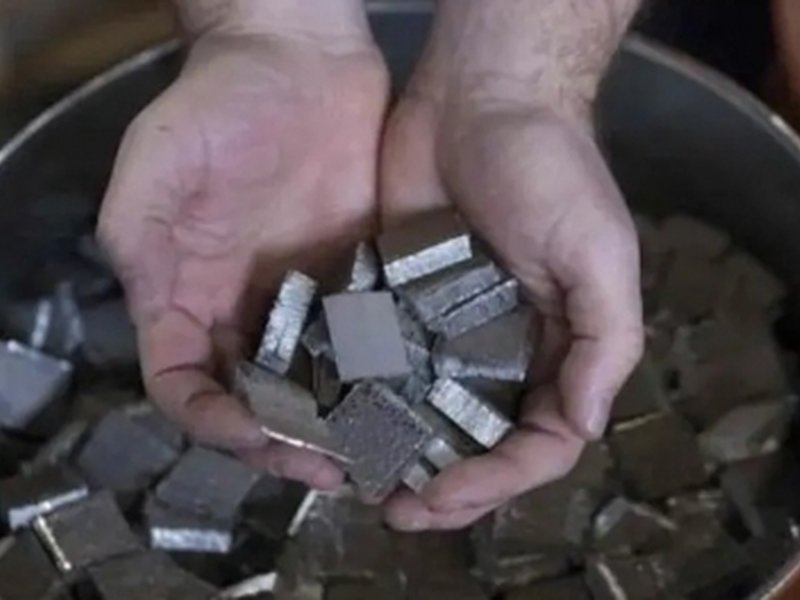
Key measures included the enactment of the MMDR Amendment Act, 2025, expansion and renaming of the National Mineral Exploration Trust (NMET) to National Mineral Exploration and Development Trust (NMEDT), reflecting its expanded role to not just explore but also facilitate the development and overseas acquisition of strategic minerals, funded by increased contributions from mining lessees as part of major 2025 mining reforms.
NMEDT’s enhanced funding, streamlined auction processes with defined timelines, removal of restrictions on captive mine sales, reclassification of select minerals as major minerals, notification of royalty rates for critical minerals, promotion of mineral exchanges, and implementation of offshore mining reforms were important milestones achieved during the year, said the statement.
Together, these reforms aim to improve transparency, ease of doing business, accelerate mineral production, and support sustainable development, positioning the mining sector as a strategic pillar in achieving the vision of 'Viksit Bharat 2047', according to a statement issued by the Ministry of Mines.
The year 2025 witnessed a sharp acceleration in the country’s mineral resource development. A total of 141 mineral blocks were successfully auctioned by December 5, 2025. This included 79 blocks auctioned for Mining Lease (ML) and 62 blocks awarded as Composite Licence (CL).
This is the highest number of blocks auctioned in a single year since the auction regime began in 2015, reflecting faster processes and stronger participation from states and the industry. Notably, Assam and Uttarakhand have auctioned mineral blocks for the very first time during this period, marking their presence into the auction map of India.
Since the introduction of the auction regime in 2015, 585 mineral blocks have been successfully auctioned in the country.
During the year, Madhya Pradesh and Rajasthan have auctioned the highest number of blocks, with figures of 33 and 22, respectively. Among the minerals, Limestone accounted for the largest number of auctions (41), followed by Iron Ore (32) and Bauxite (22).
A Mining Dashboard was also launched on April 4, 2025 to enable near real-time tracking of auctioned mineral blocks, associated clearances, and delays. The Dashboard serves as a critical tool to fast-track the operationalisation of mineral blocks by monitoring key milestones such as issuance of letter of intent (LoI), execution of lease deeds, and grant of statutory clearance. With both public and private access modes, it enhances transparency and accountability while enabling close oversight by the State and Central Governments.
In an important milestone, The Union Cabinet approved the setting up of the National Critical Mineral Mission (NCMM) in January, 2025 with a financial outlay of Rs 16,300 crore and expected investment of Rs 18,000 crore from PSUs and other companies. The Mission aims to secure a long-term sustainable supply of critical minerals and strengthen India’s critical mineral value chains encompassing all stages from mineral exploration and mining to beneficiation, processing, and recovery from end-of-life products.
India has also entered new US-led multilateral Minerals Security Partnership for secure supply chains of critical minerals, aimed at reducing dependency on China. This will help securing minerals for Indian Industries.
On December 4, 2025, India also held discussions with the International Energy Agency on strengthening cooperation in the critical minerals value chain, enhancing data-driven collaboration, and exploring joint opportunities to support India’s clean energy ecosystem. Besides, MoUs have been signed with Argentina, Mongolia, Japan and Bolivia to expedite mineral exploration and production.
Public sector companies under the Ministry of Mines such as National Aluminium Company limited (NALCO) and Hindustan Copper have also come up with a robust performance in 2025. NALCO recorded net profit of Rs 5,325 crore in FY 2024-25 and posted a revenue of Rs 16,788 crore. The company continued to retain its position of lowest cost producer in bauxite and alumina production in the world in 2024.
Hindustan Copper Limited posted a 54 per cent increase in profit before tax at Rs 633.51 crore in FY 2024-25, from Rs 410.43 crore in FY 2023-24.
--IANS
sps/na