
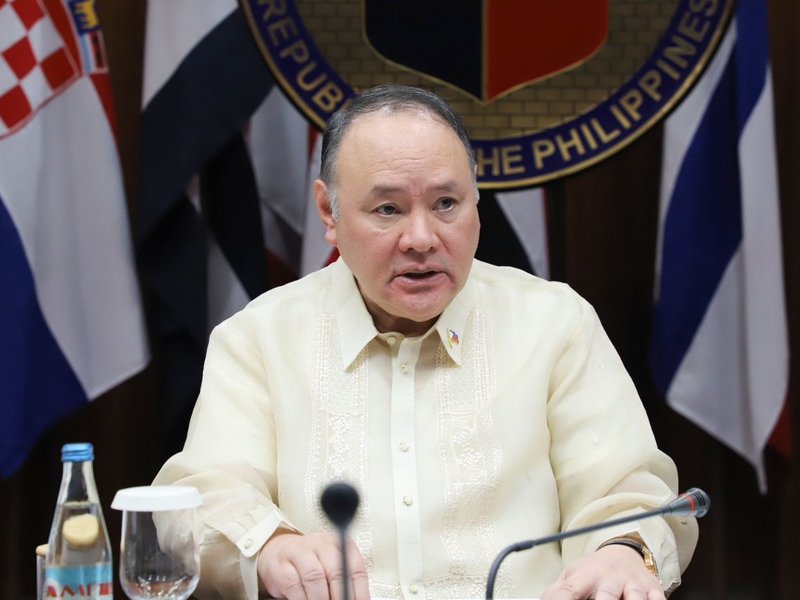
Manila, June 21 (IANS) China’s sanctions against Philippines Defence Secretary Gilberto 'Gibo' Teodoro Jr. and his family are crossing the line into unilateral coercive measures, a local media report said on Sunday.
The sanctions were announced by China earlier this month, banning Teodoro and his family from entering mainland China, Hong Kong, and Macao, and prohibiting Chinese entities from conducting business with them.
China accused Teodoro of making "irresponsible remarks" that allegedly undermined Chinese interests, sabotaged the ties between the nations, after Teodoro’s remarks about Philippine rights in the West Philippine Sea.
"When a major power levels sanctions against the sitting defence secretary of a sovereign nation specifically for his official statements — in this case, defending Philippine territorial claims in the South China Sea — it crosses the line into unilateral coercive measures. Then the sanctions become a tool meant to isolate a state official, penalise the country’s defence posture, and implicitly pressure the government to alter its policy," the Manila Times report said.
However, the move is hardly surprising as China previously used similar sanctions against former senator Francis Tolentino in July 2025 for “egregious conduct on China-related issues” and “malicious remarks and moves” driven by “selfish interests” that damaged bilateral relations.
Tolentino said he considered the ban a badge of honour, while Teodoro shrugged off the sanctions against him and his family, saying he does not have any plans to visit China and has no assets in the country.
"That is their right," he said about the Chinese ban. "That is truly what they do to those who speak the truth against their deception. Their own countrymen and the others under their control suffer far worse."
The Department of Foreign Affairs of the Philippines called the move by China an "unfriendly act", which is needlessly harming the relationship between the nations and "further complicates the bilateral relations" during an already tense period.
It argued that targeted punishments against the officials of the Philippines do not contribute to building mutual trust or creating the necessary conditions for constructive diplomatic engagement.
While the targeted sanctions may have very little practical effect, “they do violate the spirit of the United Nations Charter’s principle of non-interference, which is meant to protect states from external pressures designed to force a change in their domestic or foreign policies,” highlighted the report.
--IANS
ksk/vd