

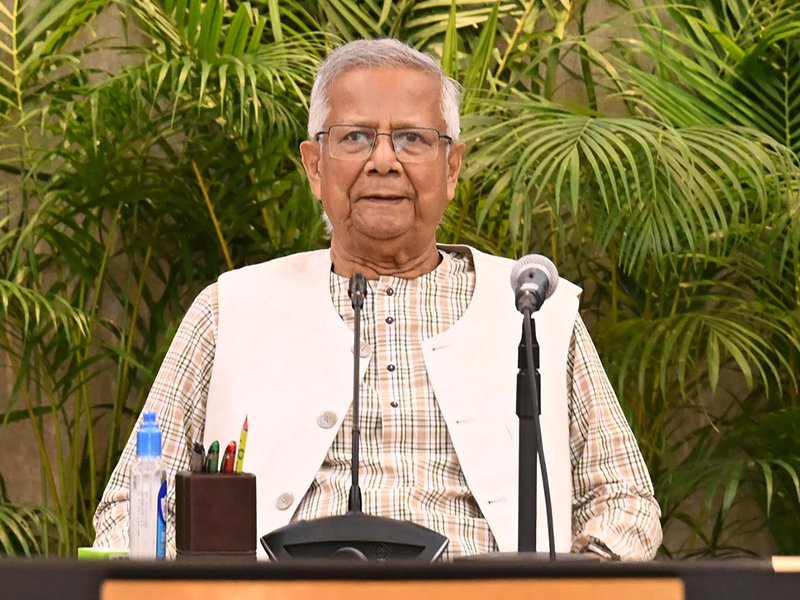
London, Dec 17 (IANS) Bangladesh’s interim government led by Muhammad Yunus, rather than stabilising the nation and rebuilding trust, risks exporting its internal fractures onto the global platform, undermining the moral foundation rooted in the nation’s history of genocide and pursuit of justice, a report said on Wednesday.
It added that Britain, given its legal heritage, diplomatic influence, and historical ties, must be vigilant in whom it legitimises, upholding justice and truth rather than political expediency.
“Bangladesh is not an ordinary postcolonial state, and Britain cannot pretend to be a neutral observer of its trajectory. Bangladesh was born in blood. In 1971, up to three million people were killed, millions were forced into exile as refugees, and more than 400,000 women were systematically raped during the Liberation War. This genocide — conducted by the Pakistani military with the assistance of local collaborators and Islamist militias from the radical Jamaat-e-Islami movement - is not a historical footnote. It is the moral foundation of the modern Bangladeshi republic,” Chris Blackburn, Communications Director at the European Bangladesh Forum, wrote for the UK based ‘Comment Central’.
“Yet under the interim administration led by Muhammad Yunus, there is growing unease that this foundational legacy is being eroded. Not through crude denial, but through selective justice, historical revisionism, and the quiet rehabilitation of actors and narratives once held morally beyond the pale. In the language of reform and reconciliation, the clarity of 1971 is being blurred - and with it, the state’s moral compass,” he added.
According to Blackburn, the International Crimes Tribunal of Bangladesh (ICTB) lies at the heart of the growing concerns. Established to prosecute the atrocities of the country’s 1971 Liberation War against Pakistan, the tribunal once represented the nation’s moral reckoning but that symbolism is under strain.
“The ICTB is increasingly criticised by observers who argue it is being steered by legal networks sympathetic to radical Islamists. This development risks reopening unresolved battles over the moral accounting of the Liberation War. What was meant to preserve historical accountability now risks becoming a vehicle for political intimidation and historical vandalism,” he stated.
Blackburn highlighted that the most troubling example of this trend is the targeting of sitting British MP Tulip Siddiq. He described the use of Bangladeshi state machinery to target an elected UK legislator as “extraordinary”.
The case, the expert said, raises serious questions about proportionality, due process, and political motivation, directly reflecting the concerns outlined by the International Bar Association’s Human Rights Institute (IBAHRI).
“This is not a routine legal dispute. It represents a transnational extension of domestic political conflict and a breach of diplomatic restraint. It also exposes a deeper contradiction: why is an unelected interim administration, ostensibly tasked with stabilisation and reform, expending political capital on pursuing a foreign parliamentarian?” he questioned.
--IANS
scor/as